

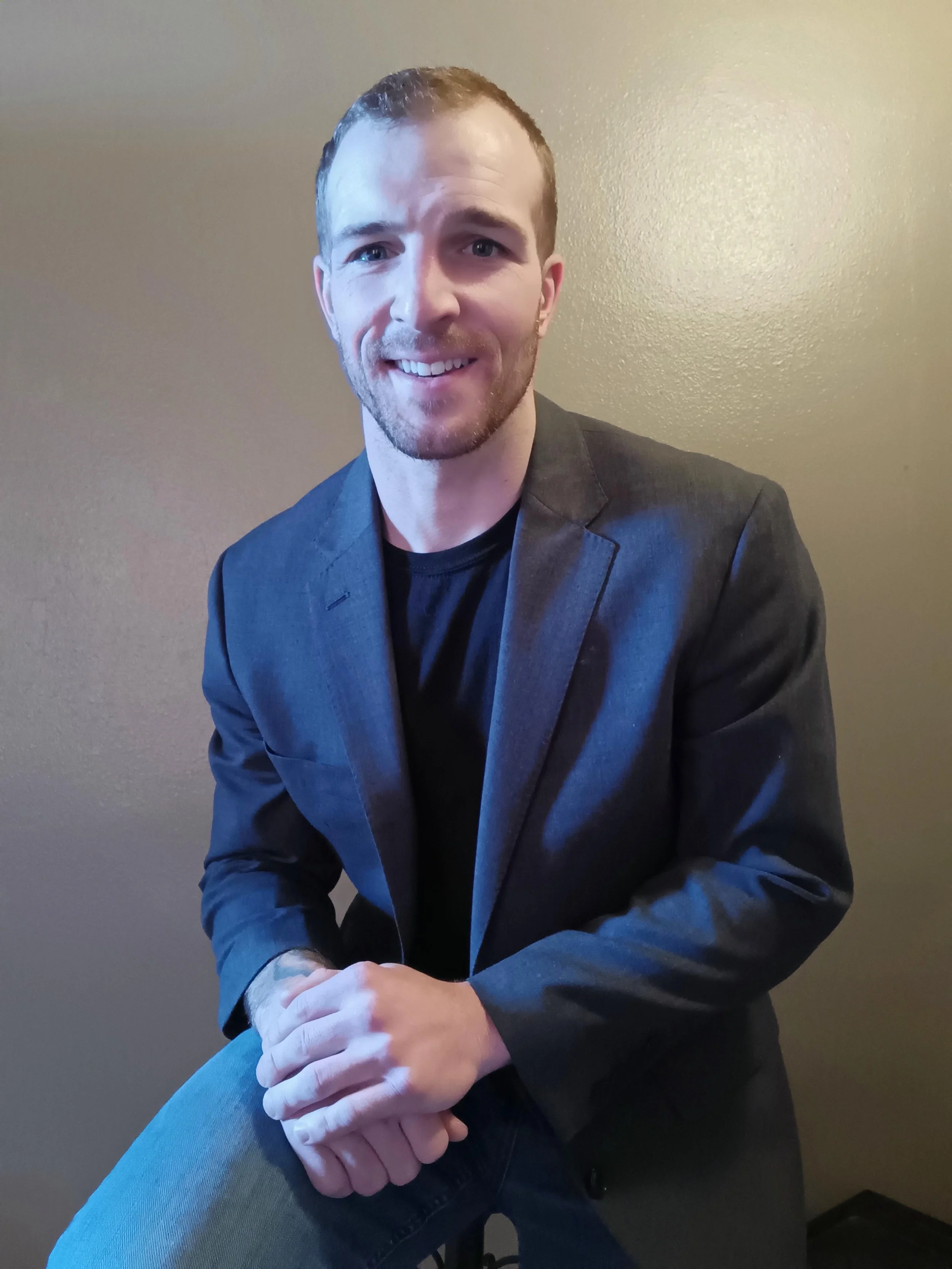
Meet hUNTER
“My path to into therapy wasn’t exactly the one I thought I would take.”
Out of high school, I anticipated staying in my small hometown and working there until retirement. Instead, on my way home for Christmas break in 2009, I stopped by an Army recruiter's office on a whim—much to my mother's surprise.
For the next few years, I bounced between the civilian world and life as a combat soldier running demolition ranges. After finishing a tour in Afghanistan and ending my service in 2016, I entered what I call the "grit and bear it" stage of my life. I found I could no longer enjoy the simple things I once loved. Looking for a reset, I packed up, moved to Montana, and worked carpentry in the isolation of the Rocky Mountains.
Even after returning home and continuing to work in the trades, I still carried the traumas and symptoms of my past experiences. When I finally decided to seek help, I struggled to find a therapist I could genuinely relate to—someone who understood that specific world and mindset. But once I started my own healing journey, everything clicked. I knew I wanted to become the kind of down-to-earth therapist I had been looking for.
Why I Started Foundry Health
I know what it’s like to try and outwork your struggles, to isolate, and to feel like nobody quite gets it. I started this practice to provide meaningful, relatable therapy to anyone who finds their way to me.
I bring my experiences in mental health and case management positions, but more importantly, I bring my lived experience. When I’m not in the office, you’ll find me raising my family with my spouse on our little hobby farm, in the woods, or out on a lake.
Whether you're a first responder, a nurse, an athlete or simply someone trying to find your way out of the 'grit and bear it' phase, I’m here. I believe this is where I am meant to show up in the world, and I’d be honored to help you show up in yours.
I do not believe in a one-size-fits-all approach to therapy. Depending on what you are dealing with and how you operate best, I draw from a toolbox of evidence-based methods.
Cognitive Behavioral Therapy (CBT): Figuring out how your thoughts are driving your actions and learning practical tools to rewrite that script so you can break out of negative cycles.
Acceptance and Commitment Therapy (ACT): Learning how to stop fighting the things you cannot control, getting unstuck from difficult emotions, and committing to actions that align with the kind of life you actually want to build.
Trauma-Informed Care: Recognizing that your symptoms are often normal reactions to abnormal situations. We process the heavy gear you have been carrying in a way that keeps you feeling safe and in the driver's seat.
Attachment Theory: Looking at how your early relationships and past connections shape the way you handle trust, conflict, and boundaries in your life today.
Solution-Focused Brief Therapy: Spending less time venting about the past and more time identifying what is already working, building a concrete, forward-looking game plan to get you moving again.
Narrative Therapy: Examining the stories you have been telling yourself about who you are and what you are capable of, and editing out the parts that are holding you back.
Continuing Education and Advanced Modalities The field of trauma recovery is constantly evolving, and I am committed to bringing the most effective tools to my practice. I am continuously staying up to date with future training, specifically in EMDR (Eye Movement Desensitization and Reprocessing) and Psychedelic Integration, to ensure my clients have access to cutting-edge approaches for healing.